百褶裙仍是時尚零售業的熱門品項 台灣它們適合學生制服、辦公穿搭以及休閒造型。不過,百褶經過清洗或收納後容易走樣。因此,清楚的保養指引可以為消費者增加價值。品牌與經銷商可將這些技巧用於商品頁、包裝說明卡或是售後內容,有助降低退貨率,並在競爭激烈的台灣服裝市場提升顧客信任感。
技巧一:沿原本的褶線折疊
務必順著裙子原本的褶線折疊。隨意折疊會讓面料承受不均勻的壓力,原本俐落的褶紋可能因此變平、扭曲。對於聚酯纖維百褶裙來說,這一步格外重要;這類面料的褶皺多是熱定型而成,雖然定型效果穩固,但長期錯誤折疊,仍會慢慢破壞褶型結構。
技巧二:層與層之間墊上薄紙
Place thin tissue paper between folded layers. This prevents deep creases from forming in the wrong places. It also reduces friction between fabric surfaces. For satin, chiffon or fine polyester skirts, tissue paper protects the surface. Retailers can include this advice in care cards. Consequently, end users in Taiwan can store garments more safely at home.
Tip 3: Store Upright Instead of Stacking
Upright storage reduces horizontal pressure on pleats. Heavy stacking may flatten the lower folds first. Therefore, drawer dividers or garment boxes work better. This method also makes it easier to find one skirt without disturbing others. For retail warehouses, upright packing can improve inventory handling. It is particularly useful for Taiwan’s small-space living environments.
Tip 4: Avoid High Heat During Ironing
High heat can damage heat-set pleats permanently. Instead, use low-temperature steam from a distance. If ironing is necessary, place a cotton cloth over the skirt. Never press hard along the pleat edges. For wool-blend or acetate fabrics, professional steaming is safer. Brands should label this clearly for Taiwan consumers who handle garments at home.
Tip 5: Hang With Proper Support When Needed
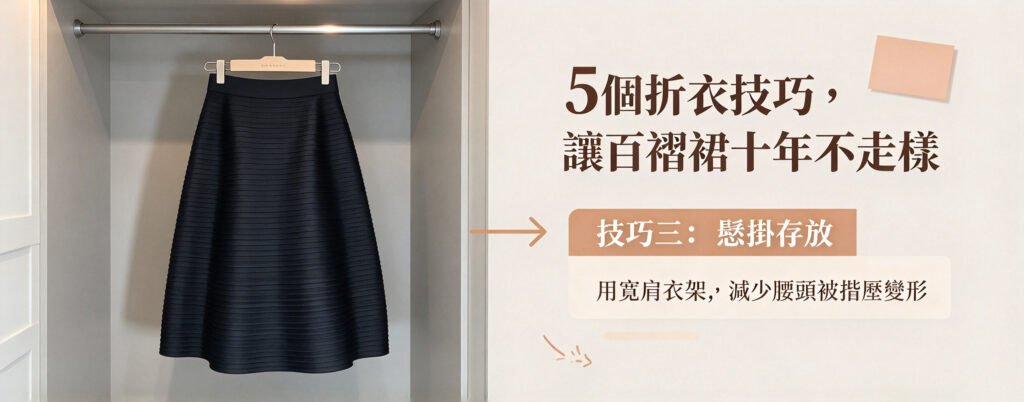
Some pleated skirts benefit from hanging instead of folding. Use a skirt hanger with clips or a padded waistband support. Avoid clipping directly on delicate fabric. For long pleated midi skirts, hanging reduces fold-line stress. However, very heavy pleats may still stretch. Thus, material weight should guide the storage method. More garment care ideas can be explored through CLV.
Material and Style Options for Taiwan Retailers
Taiwan buyers look for different pleated skirt styles. Knife pleats, box pleats and accordion pleats each behave differently. Polyester and polyester-blend fabrics are common because they hold shape well. Cotton blends feel softer but need more careful storage. Wool-blend options suit premium collections. Retailers can match care advice to each material. This strengthens brand professionalism in the Taiwan market.